ARRIVAL & MEAL
Fix the time before you fix the room
Confirm the latest check-in time, dinner and breakfast sittings, and the shuttle pickup window before choosing a plan.
JAPAN RYOKAN
Ryokan stays often have more arrival, meal, and bathing details than a typical hotel. Asking the right questions before booking helps you decide whether the stay fits your plans and prevents a late-arrival or meal-time surprise.
Written by Satoshi Morinaga · Updated
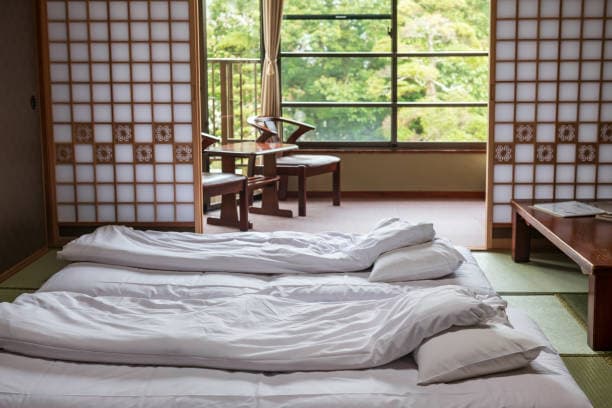
Ask about arrival and meal timing first, because both the check-in window and the dinner sitting are usually fixed by the ryokan. Then ask about the room and bath, since private baths often need a separate reservation, and finally confirm the booking plan's cancellation and payment terms before you commit. The Japan Tourism Agency notes that ryokan meals have set service periods, and that once that period has passed, the meal may no longer be available — so the answer to "is dinner included?" is only useful with the timing.
ARRIVAL & MEAL
Confirm the latest check-in time, dinner and breakfast sittings, and the shuttle pickup window before choosing a plan.
ROOM & BATH
A reserved private bath often needs a booking on the day, can carry a fee, and is separate from the room you are reserving.
BOOKING TERMS
Each ryokan and each plan sets its own cutoff, deposit, and payment method. Confirm the exact plan you are about to book.
Use this table to pick the one question that actually matters for your trip. If your situation is not listed, ask the ryokan directly rather than assuming a general rule.
| Your arrival situation | Question to ask first | Why it matters |
|---|---|---|
| Late train or flight, unsure of exact time | What is the latest check-in time, and what happens to dinner if I arrive after the sitting? | Dinner is usually served at fixed sittings, often around 18:00 or 19:00. A late arrival can mean a missed or moved meal unless the ryokan confirms otherwise in advance. |
| Dietary need (allergy, vegetarian, religious) | Can the kitchen prepare a meal that excludes this ingredient, and is the answer the same for every course? | Ryokan meals are often pre-set, so a single ingredient can be hard to remove across many small dishes. The ryokan's answer is what counts on the day. |
| Family or mixed group who want a private bath | Does the property have a private or family bath, and is a reservation required for our check-in date? | Many ryokan private baths are charged, time-limited, and reserved on the day. The room you book usually does not include private-bath access. |
| Arriving by train to a remote onsen town | Do you offer a shuttle, from which station, and what is the last departure time? | Some ryokan shuttles only run a few times a day and require advance notice. Miss the last shuttle and the next option can be a long, late taxi. |
| Travelling with children, mobility needs, or specific bedding | Which room or plan supports our need, and is there an extra charge or condition? | Tatami rooms, futon bedding, and step-free access vary by room. The ryokan's plan description controls what is actually available. |
| Already booked, just need to confirm a detail | Could you confirm our reservation for [date] at [time] under the name [name]? | Confirmation is faster than rebooking and is the most useful use of a routine call for a stay you already have. |
Ryokan vary from small family-run inns to large onsen resorts, and the right question depends on which one you are considering. A national listing such as the Japan Ryokan Association records facts like check-in time, where meals are served, and whether a reserved private bath is available, but the specific answer for your room and plan still comes from the property itself. Use the listing for orientation, then ask the ryokan about the room you are actually booking.
A ryokan in an onsen town or a remote valley is often best reached by its own shuttle. Japan Travel by NAVITIME notes that pickup buses often have a set departure time, that you may be able to choose the time when you reserve, and that the location of the pickup point is worth confirming in advance because some ryokan pick up at a different station than the main JR stop. The shuttle window is also the practical deadline for your check-in.
A "ryokan plan" is usually a specific combination of room, meals, and bath access sold at a stated price, and the cancellation rules are tied to that plan. A dinner-included plan can mean a sitting at 18:00 or 19:00 in the dining room, dinner in your room, or a multi-course kaiseki served at a set time. Read the plan description for the words "dinner included", "no meal", or "breakfast only" and confirm the room, meal location, and any private-bath credit that goes with it.
Send this through the ryokan's official contact form, email, or booking platform. Do not include payment-card details or passport images. Replace the brackets, keep the request to one screen, and add or remove lines to match the plan you want.
EMAIL / FORM TEMPLATE
Subject: Reservation question for [check-in date] — [ryokan name]
Hello, I am considering a reservation at [ryokan name] for [check-in date], [nights] night(s), [number of guests] guest(s). I do not speak Japanese, so I am writing in English. Could you please confirm the following for the plan I am considering ([plan name or room type]): • Latest check-in time, and what happens to dinner if I arrive after the sitting. • Whether dinner and breakfast are included, and the sitting times available. • Shuttle service from [station name], pickup point, schedule, and the last departure time. • Whether a private or family bath is available, whether it needs a reservation, and any extra charge. • Whether the kitchen can accommodate [allergy / vegetarian / religious] meals across every course. • Cancellation cutoff, any deposit, and how payment is taken on arrival. If the plan above does not fit our schedule, please suggest an alternative plan or date. Thank you.
If the latest check-in time, the dinner sitting, or the shuttle window does not fit your plan, ask the ryokan whether another date, plan, or property would work before you book. Do not assume a ryokan can hold dinner, a shuttle, or a private bath outside the stated arrangement. Treat the ryokan's current answer and the written plan description as the source of truth. A phone call through a Japanese speaker is useful for clarifying a practical detail, but you make the reservation, the deposit, and the cancellation decision directly with the ryokan.
For ryokan and hotels, we can confirm or change an existing booking, or make a routine inquiry about arrival, meals, baths, and shuttle. Under Japanese travel-agent law, we do not make new ryokan or hotel reservations. Make new reservations directly with the accommodation, and complete any deposit, payment, or passport copy directly with the ryokan.
If you'd rather try the call yourself first, these phrases can help.
Have a practical question for a ryokan? Request a Japanese phone inquiry, then book directly with the accommodation.
Request a callMore from MORISTACK
MORISTACK also publishes MORISTACK Plan, a set of practical Japan travel guides on hotels, luggage, eSIM, JR passes, and city-office procedures — researched end-to-end, with a map and a written guide you can use yourself.
Browse Japan travel guides →This site uses Travelpayouts affiliate links. Loading their tracking is optional — accept to enable partner attribution, or decline to skip it. See the Privacy Policy.